
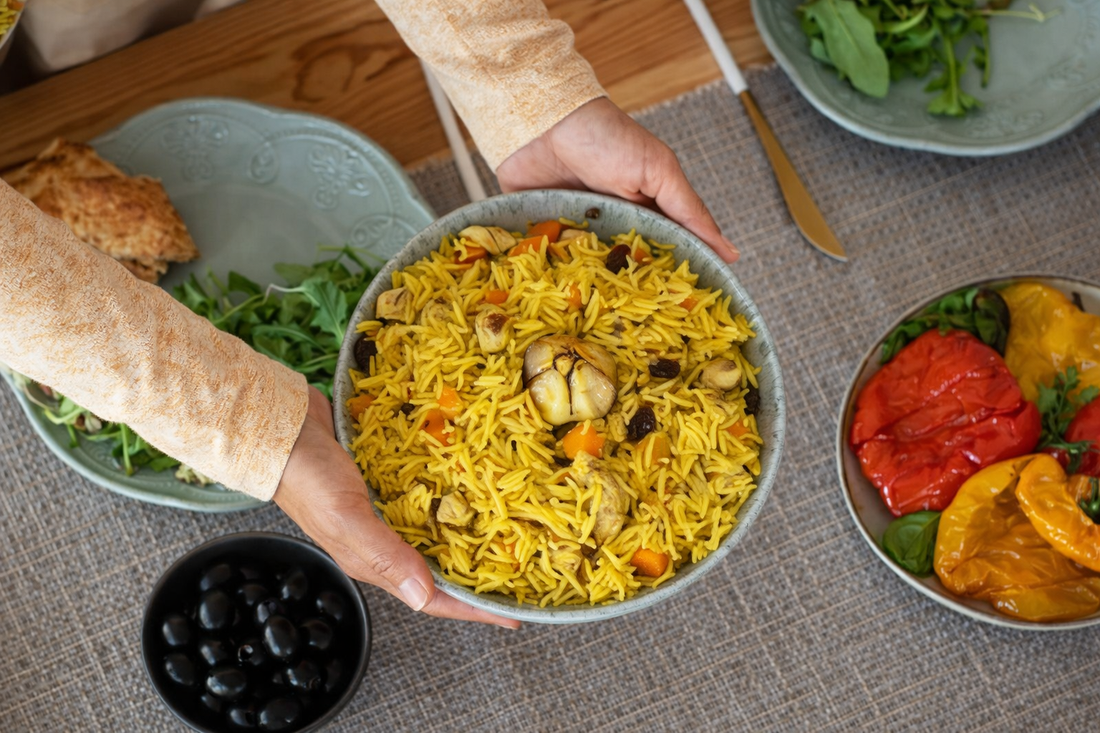
In contrast, when using traditional aged basmati rice, the rice is going to absorb all of the flavors of the ingredients used during the preparation of the biryani, the rice will remain firm after being cooked for a longer period of time over low heat, and the rice will also lengthen during the cooking process.
Age Rice is distinct in that we specialize in traditional aged, heritage-quality basmati rice. We focus on authenticity, patience and tradition as opposed to utilizing shortcuts. If you want to prepare your biryani in a manner consistent with the enjoyment of biryani, then your journey begins with the right rice.
What Truly Makes Basmati Rice Perfect for Authentic Biryani
Not all basmati rice is worthy to be biryani. In order to create an authentic biryani there are 5 non-negotiable characteristics for the basmati rice.
- Extra-long grain structure: Premium basmati has naturally long and slender grains which will become longer as they cook - never short or stubby.
- Natural aroma: The aroma when cooking true basmati is warm, nutty and fragrant, and this is due to the ageing process and not from the application of polish or artificial sprays.
- Grain elongation after cooking: As quality basmati cooks it expands and elongates in length; it maintains the individuality and elegance of each grain on your plate.
- Firm texture for dum cooking: You will need to steam and slowly cook layers of basmati rice in order to create biryani. The rice must have enough firmness to maintain separation during this time without becoming soft or mushy.
- Aging period (12-24+ months): There are three main reasons that aged basmati is required to create real biryani:
Reduction in moisture content, strengthening of grain structure, and development of aromatic characteristics through the ageing process.
New Crop Rice vs. Aged Basmati Rice
|
Feature |
New Crop Rice |
Aged Basmati Rice |
|
Moisture content |
High |
Balanced & reduced |
|
Aroma |
Mild, grassy |
Deep, nutty |
|
Cooking behavior |
Sticky, fragile |
Firm & elongated |
|
Dum suitability |
Poor |
Excellent |
Why Traditional & Aged Basmati Outperforms Modern Hybrid Rice
Traditional basmati rice refers to original basmati rice varieties that have been grown in the Indo-Gangetic Plains and have been planted for generations because of their unique combination of aroma, texture, and characteristics during cooking. Modern hybrid rice is focused on increased yields and reduced harvesting times, but many of the new hybrid rice varieties do not have the same level of flavor/aroma as well as texture as the traditional varieties of rice, both of which are key components of Biryani.
The age of traditional basmati rice allows it to better absorb the spices, stock, and ghee in a biryani dish and therefore allows the flavors to be absorbed into the grain rather than remaining on the surface of the grain. Therefore, traditional basmati rice has historically been the rice used in all classic styles of biryani such as Hyderabadi, Awadhi and Royal Mughlai.
By focusing solely on aged traditional basmati rice, Age Rice establishes itself as the authoritative voice on genuine biryani rice, not simply another packaged rice product.
Top Traditional Basmati Rice Varieties for Biryani by Age Rice
Traditional Basmati Rice
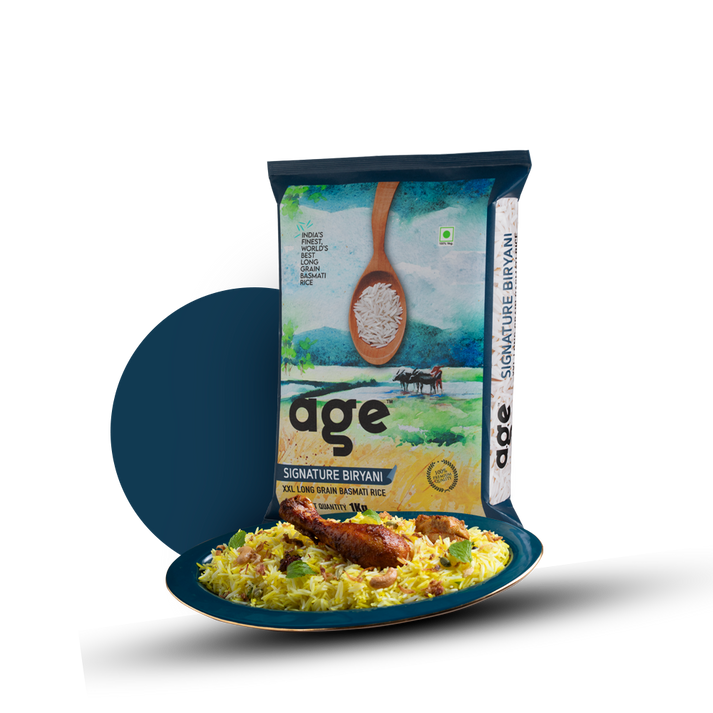
Basmati rice by Age Rice is known for its impressive shape and quality look. It has superior grain separation compared to other basmati rice forms.
Best for: Hyderabadi Biryani, Dum Birayni (Royal Style)
How it performs well: Its strong structure makes it stand out. Also, its elegant visual appeal once cooked.
Rozana Basmati Rice

Its unique natural smell will add to your dish's aroma, and will perform consistently even on low heat.
Best for: Awadh Birayni, Dum Cooking
How it performs well: The rich aroma of the rice absorbs the flavor of your dish slowly and steadily.
Extra Long Grain Basmati Rice
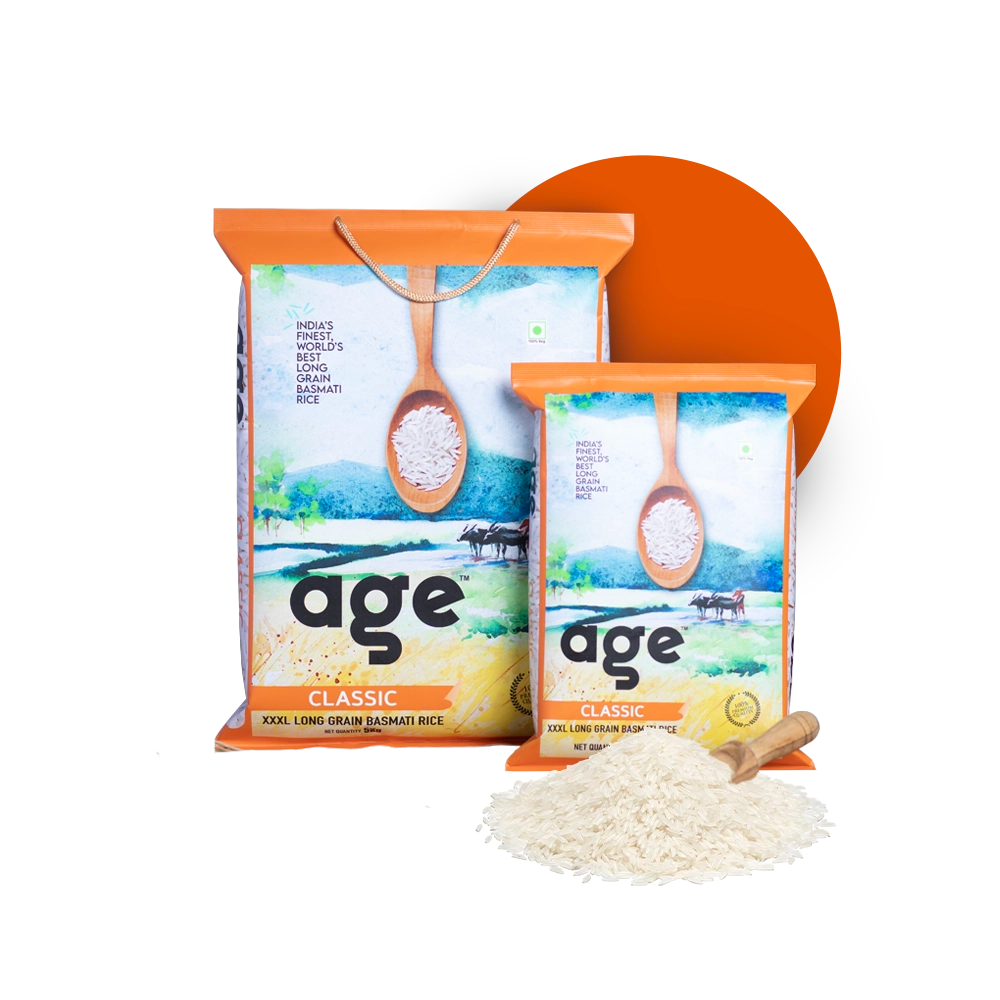
It is a good all-round product. It has an extended grain and a slightly soft texture after cooking.
Best for: Homemade Biryani, Vegetarian Biryani
How it performs well: It retains its texture but is still soft and does not lose its grain definition.
Aged Basmati Rice
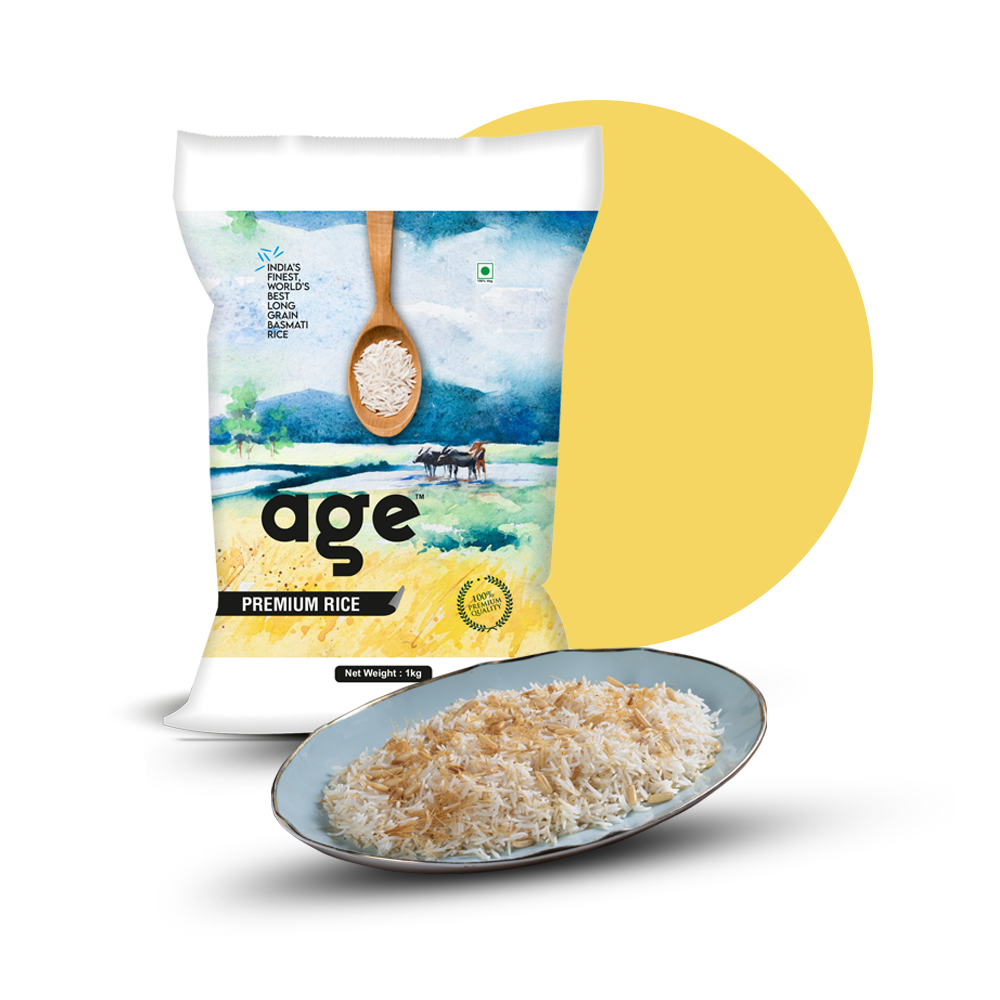
As naturally aged rice by Age Rice has a consistent taste and texture, so you can cook it quickly and get the same firmer texture.
Best for: Restaurants, large-scale Biryani Preparation
How it performs well: The grains are uniform and the result is predictable when using large quantities.
Which Traditional Basmati Rice Is Best for Your Biryani Type?
Chicken biryani: Firm, long-grain aged basmati for clean separation

Mutton biryani: Highly aged varieties with deep aroma to match rich meat

Vegetable biryani: Balanced softness with gentle fragrance

Restaurant biryani: High elongation and consistent grain quality

How Age Rice Preserves Authentic Biryani Rice Quality
Age Rice is strong because of a strong process and an unapologetic commitment to sourcing quality ingredients:
- From the same GI-protected regions where the best basmati grows (and therefore has the right soil and climate).
- Aging process that uses natural methods, not chemicals or any other artificial means to accelerate .
- Moisture controlled at every point, and each and every grain checked at each stage for damage or loss of structure
- Polished to the bare minimum possible so as to keep all of the essential oils and aromas intact.
Each step of the way is a result of a single-minded pursuit of making sure that the final product will meet and perform as required by the ancient traditions of Biryani cooking.
How to Cook Aged Basmati Rice Perfectly for Biryani
To really unlock the best of an aged basmati rice:
- Washing: Wash it just two or three times at most, because excessive washing will strip away the rice’s aromatic properties.
- Soaking: Soak it for thirty to forty-five minutes in order to insure all the grains have a chance to expand equally.
- Ratio of Water: Use a high amount of water (similar to when you cook pasta) to get your basmati rice to be perfectly cooked in the first parboil.
- Parboil Stage: When you boil your basmati rice, let it reach about seventy to seventy five percent completion, then stop the boiling and proceed with the dum step.
- Dum Cooking: Once you have finished the initial step of the dum, allow the steam to finish the cooking of the basmati rice. Do not stir.
Common Mistakes That Ruin Biryani Rice
It is equally important to avoid common mistakes that can ruin a perfect plate of steamed rice and dumplings. These include:
- Skipping the soaking step
- Overcooking the rice before dumpling making
- Mixing or stirring the rice while you are layering it
- Buying rice based on appearance rather than aroma
These should be avoided in addition to purchasing the correct type of rice.
Conclusion: Choose Tradition for Real Biryani Flavor
Biryani is not about taking the easy route; it's about paying homage to the past. Beginning from the texture of the rice, till the fragrance once the biryani is made, traditional aged basmati rice is known for granting a biryani experience like no other.
From the commitment to using heritage sources for our rice, to the time and care we take in naturally ageing it and adhering to an uncompromising level of quality, Age Rice will get you as close as possible to enjoying the same biryani that has been enjoyed by so many people throughout history.
Try biryani the way it was meant to be with Age Rice.
Frequently Asked Questions
Q1. Which basmati rice is best for biryani?
Traditional basmati rice by Age Rice is the best for biryani owing to its long grains and natural aroma.
Q2. How much aging is ideal for biryani rice?
If you desire optimal aroma, firmness, and elongation for biryani, aging between 12 to 24 months is recommended.
Q3. Is basmati rice by Age Rice suitable for both veg and non-veg biryani?
Yes. Basmati Rice by Age Rice is popular for its quick adaptation, i.e., absorbing lighter flavors in veg biryani and richer gravies in meat-based biryanis.
Q4. How can I identify genuine aged basmati rice?
Look for long grains that are slender in shape, have a mild nutty aroma after drying, and offer firm grains after cooking.